
Marymoor Park is one of the largest and most programmatically diverse public parks in the Pacific Northwest — a 640-acre King County facility situated at the southern end of Lake Sammamish in Redmond, Washington that serves residents across the greater Seattle metropolitan area with a range of recreational amenities, cultural programming, and natural open space that few urban-adjacent parks in the American West can match.
Located along the Sammamish River Trail corridor at the point where the river exits Lake Sammamish and begins its northward journey toward Lake Washington, the park occupies land that has carried civic and agricultural significance for more than a century.
For Redmond residents, eastside King County families, and anyone navigating the recreational landscape of the greater Seattle area, Marymoor Park represents a public asset whose depth and variety consistently surprises those who encounter it for the first time.
From Marymoor Farm to King County Park
The park’s origins lie in the Marymoor Farm estate established by James Clise in 1904, whose early twentieth century agricultural operations were among the most productive in the Sammamish Valley.
The property passed through several owners before King County acquired it in 1963, establishing the foundation for the public park that has grown steadily since its establishment into one of the county’s most visited and most loved recreational destinations.
The transition from private agricultural estate to public park reflected broader postwar trends in King County’s development — the suburbanization of the eastside and the growing demand for accessible outdoor recreation space that the region’s rapidly expanding population generated across the decades following World War II.
The Velodrome and Competitive Cycling Heritage
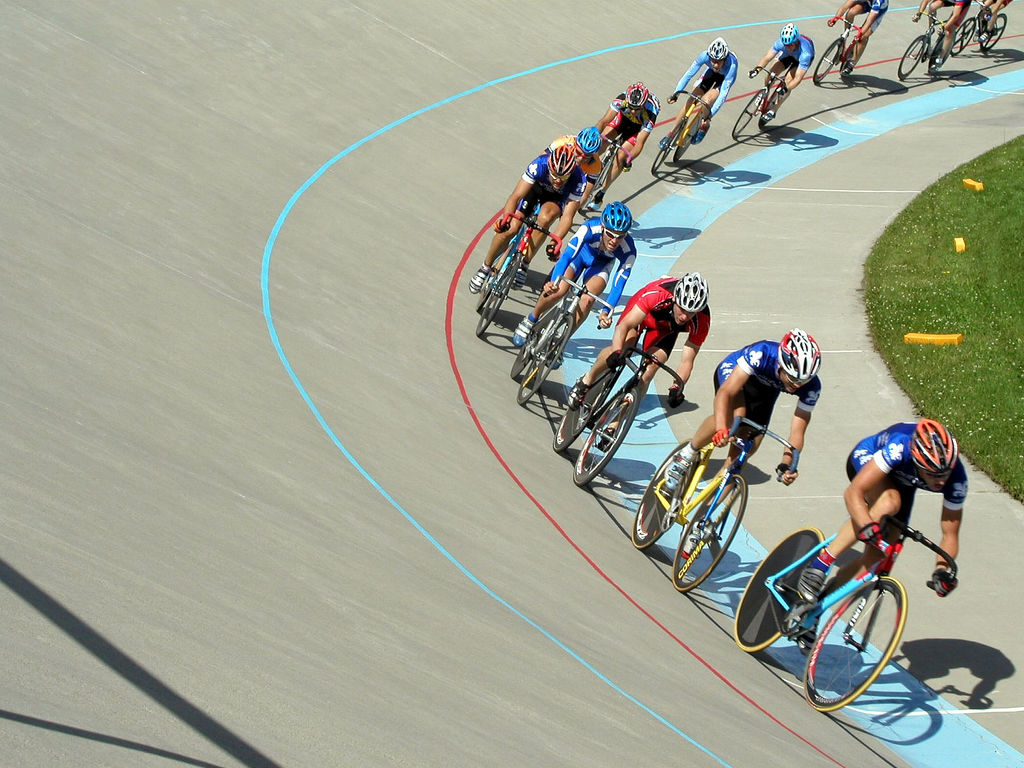
Marymoor Park’s velodrome — a banked oval cycling track designed specifically for high-speed bicycle racing — is one of the park’s most distinctive and nationally recognized amenities, operating as one of the premier outdoor velodromes in the United States and serving as a competitive venue and training facility for regional and national cycling programs.
The Marymoor Velodrome, opened in 1975, hosts weekly racing events during the summer season that attract competitive cyclists from across the Pacific Northwest alongside thousands of spectators who come to experience the distinctive spectacle of criterium and track cycling in an outdoor setting.
The velodrome’s racing calendar, maintained by the Cascade Bicycle Club — one of the largest recreational cycling organizations in the United States — draws competitors ranging from youth development riders to elite national-level athletes, creating a competitive environment that has contributed to the development of numerous cyclists who have gone on to regional and national prominence.
The Cascade Bicycle Club offers structured cycling classes and youth development programs at the Marymoor Velodrome, building the competitive pipeline that has sustained weekly track racing in Redmond across decades of Pacific Northwest cycling history.
Outdoor Concerts and the Marymoor Amphitheater
The Marymoor Amphitheater has established itself as one of the premier outdoor concert venues in the Seattle metropolitan area — a general admission lawn amphitheater that accommodates up to 5,000 concertgoers in a park setting that combines the intimacy of an outdoor lawn venue with the natural backdrop of the Sammamish Valley.
The amphitheater’s summer concert series has hosted nationally and internationally recognized performers across multiple genres over several decades of operation, making Marymoor one of the region’s most consistently booked outdoor entertainment destinations during the Pacific Northwest’s dry summer months.
The venue’s open lawn format — where concertgoers bring blankets, low-profile chairs, and picnic supplies rather than occupying fixed seating — creates the relaxed, community-oriented concert experience that distinguishes Marymoor’s events from the more structured indoor and stadium concert environments that dominate the Seattle area’s larger venues.
This format suits the Pacific Northwest’s outdoor culture particularly well during the summer months when the region’s famously pleasant weather creates ideal conditions for outdoor evening entertainment — a seasonal window that Marymoor’s programming exploits fully before the return of fall rains compresses the viable outdoor event calendar.
Trails, Open Space, and the Sammamish River Corridor
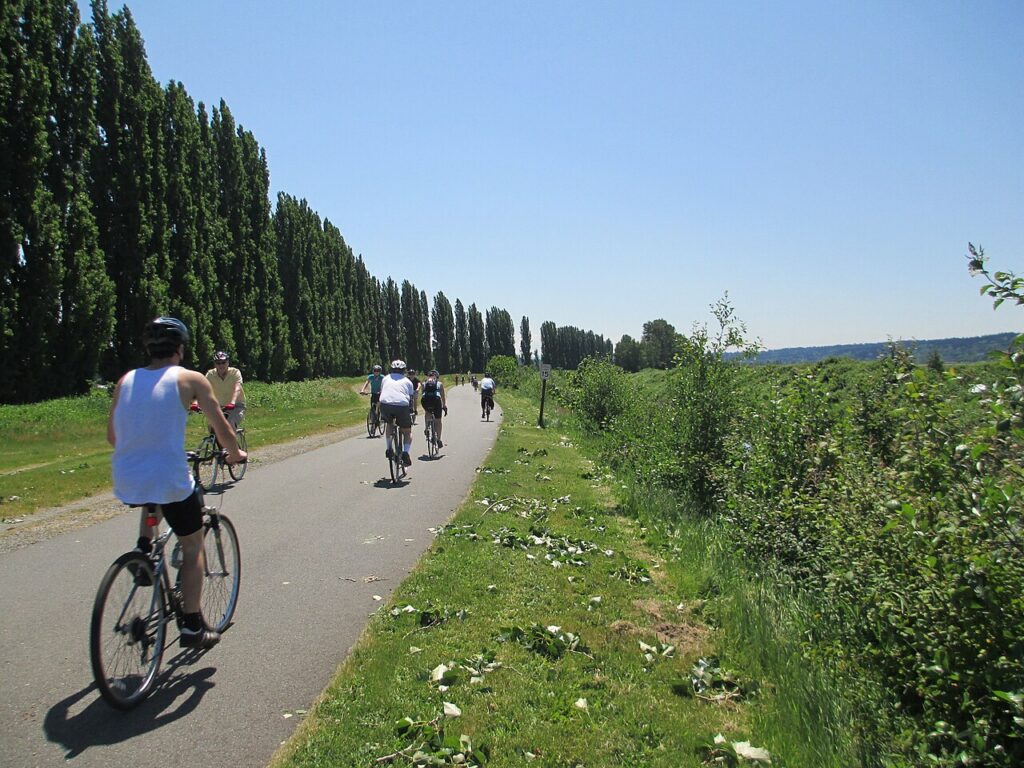
Marymoor Park’s trail network and open space connect the park to the broader Sammamish River Trail — a paved multi-use path that extends approximately 10 miles from the park northward through Redmond, Woodinville, and Bothell before connecting to the Burke-Gilman Trail system that runs through Seattle.
This trail connectivity gives Marymoor Park a regional significance that extends well beyond its own boundaries, positioning it as the anchor southern terminus of one of the most heavily used recreational trail corridors in King County. Cyclists, runners, and walkers accessing the Sammamish River Trail frequently begin or end their journeys at Marymoor, using the park’s parking facilities, restrooms, and off-leash dog area as staging and recovery amenities for longer trail outings.
The park’s off-leash dog area — one of the largest in King County at approximately five acres — draws a consistent daily population of dog owners from across the eastside communities, creating one of the park’s most active and socially connected recurring user communities.
The King County Parks department maintains Marymoor’s facilities and publishes current information on park amenities, programming schedules, and the trail connections that make the park accessible from multiple directions across the Redmond area.
.jpg)
Washington’s Climate and the Park’s Seasonal Character
Washington State’s marine west coast climate shapes Marymoor Park’s seasonal rhythm and visitor patterns in ways that are specific to the Pacific Northwest’s weather geography. Redmond experiences mild, wet winters with average January lows near 36°F and a prolonged wet season stretching from October through May that receives the majority of the area’s annual precipitation, which averages approximately 37 inches according to NOAA climate data for the Seattle-Redmond area.
This climate concentrates Marymoor’s highest-demand programming — the concerts, velodrome racing, and large outdoor events — into the dry summer months between late June and early September when reliable weather makes sustained outdoor programming viable.
The park’s spring shoulder season — when the Sammamish Valley’s natural areas are at their most visually lush but weather remains unpredictable — draws trail users, dog walkers, and the early-season cycling community who are willing to navigate occasional rain in exchange for the relatively uncrowded conditions that precede the summer programming peak.
Fall brings a similar shoulder dynamic, with the park’s natural areas offering the visual drama of seasonal foliage change that the Pacific Northwest’s deciduous tree canopy produces before the return of the extended wet season that defines Redmond’s winter and early spring calendar.
Marymoor’s Role in Redmond’s Community Identity
Marymoor Park’s significance to Redmond extends beyond its function as a recreational amenity — it shapes the community’s identity, supports property values in surrounding neighborhoods, and provides the public open space anchor that gives Redmond’s eastside urban fabric a natural counterpoint to the technology sector employment and residential development that have defined the city’s modern growth.
The park’s combination of active recreational programming, passive natural open space, and major event venue capacity gives it a functional range that no single-purpose recreational facility can match, making it genuinely irreplaceable within Redmond’s civic infrastructure.
The park’s position at the confluence of the Sammamish River Trail, Lake Sammamish, and the broader King County parks network reinforces its role as a regional connector — a place where residents from Redmond, Kirkland, Bellevue, and communities across the eastside converge for the recreational and cultural experiences that Marymoor concentrates in one location.